Home
Report on the status of wilding conifers in New Zealand released
Written by Administrator   
Wednesday, 18 July 2012 23:42

The long awaited report on the status of wilding conifers has been released by the Ministry of Primary Industries (MPI) which will provide a very good overview over the wilding conifer situation in New Zealand. The report has been developed over the last year by Victoria Froude from Pacific Eco logic commissioned by MPI in April 2011 to develop a report with the purpose to bring together information to address the historical factors, the current state and the impacts of wilding conifers but also the legislation and policy and the current management and control of wilding conifers. Logically the report also identified barriers to manage and control and the current and future risks associated with wilding spread and land use issues. In addition the report informs the reader on current research and potential opportunities and by including of a number of case studies highlight some of the ecological problems arising from wildings.

This overview led to a number of recommendations in the report to improve and guide future action and to assist MPI to determine their future role with respect to wilding conifers under the Pest Management: National Plan of Action (PMNPA) and to identify opportunities for improving efficiency and effectiveness of wilding conifer management in New Zealand.

As the report was prepared and reviewed, a wide range of stakeholders had the opportunity to contribute their perspectives, ideas and information and it gave many stakeholders also a chance to confirm or question collated information or add additional and alternative information. This allowed the identification of topics and issues where consensus exists and the identification of ways how parties could work together to improve policy and management systems affecting wilding conifer management. The WCMG and most of its members were actively involved in the development of this report. The WCMG could also provide the appropriate stakeholder forum for the preparation of the non-statutory national strategy for wilding conifer management.


The first two key recommendations from this report, that have been signed off by the Minister so far are:


  • That a non-statutory national strategy be prepared for wilding conifer management. The issues and options in the report provide a framework for the strategy and
  • That the Ministry of Primary Industries be the lead agency for preparing this strategy.


The main report (a real “door-stopper” of 207 pages) can be downloaded by clicking here.

A summary report including the key-components of the primary report and an evaluation of current and potential wilding conifer management can be downloaded by clicking here.

A number of appendices (Distribution maps from the Department of Conservation) that a supplementary information to the report are available under Maps & Models


Last Updated on Thursday, 14 March 2013 21:26
 
Welcome to the NZWCMG website
Written by Nick Ledgard   
Friday, 02 July 2010 00:00

This website was first set up in 2007 as part of a wilding research project funded by the Ministry of Agriculture and Forestry’s Sustainable Farming Fund (SFF).  The end-user group was the South Island Wilding Conifer Management Group.  That project has now ended, but at a Group meeting on June 24, 2010 it was unanimously agreed that it be continued as the New Zealand Wilding Conifer Management Group.  A major function will be to maintain this website as a central source of information concerning wildings in NZ.  We are in the process of updating it to meet that aim – particularly after a major site breakdown early in 2010.

A good introduction to the original Wilding Project is given under The Project (click here).  For a short introduction to the wilding scene in New Zealand read on below. For a more detailed background have a look at the paper by Ledgard (2004).

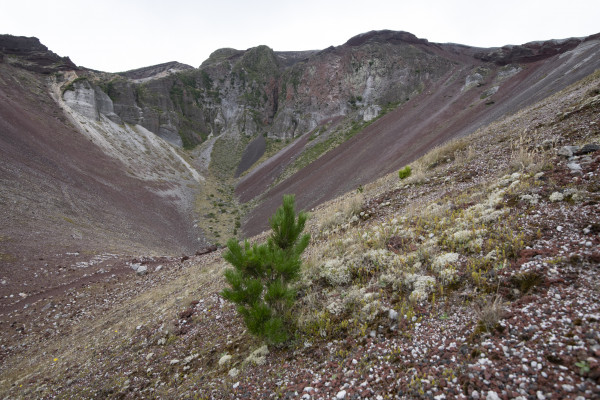
The spread of wilding conifers is causing concern, particularly on extensive hill and high country land in the eastern parts of the South Island. Within its region, Environment Canterbury estimates 62,000 ha to contain wildings. Significant areas are affected in Marlborough (around 50,000 ha affected on Molesworth station, plus 40,000 ha in the Marlborough district), Otago (around 6,000 ha in the Queenstown area alone) and in Southland (14,000 ha affected around Mid Dome). Wilding spread threatens pastoral production and conservation values, and disrupts visual landscape.

WebLandslipsmallb308.jpg
Wilding conifers spreading through tussock rangelands above L. Pukaki


Many landowners are faced with control problems, and to most private farmers, this is a new management issue. Consequently, fundamental questions relating to spread risk/prevention and operational control strategies, and post-control management have still to be answered satisfactorily.


This SFF Project offers the opportunity to form and utilise a working group to coordinate and promote wilding control efforts. There has been a call for such a group before. Concern about wilding spread lead to a workshop ("Managing wilding conifers in NZ: present and future") which was held in Christchurch during August 2003. At its end there was a discussion about future needs. As recorded in the Proceedings "The workshop strongly recommended greater collaboration between organisations across the country to share information and experience, and to develop a cohesive rationale and plan for wilding conifer management. It recommended that a working group, representing the major stakeholders, be established to decide how to find solutions to the issues (raised in the workshop).” Despite good initial attempts to get a working group up and running, it did not materialize at that time.

The Sustainable Farming Fund wilding project ('The prevention, management and control of wilding conifers') has allowed a wilding group to get up and running, and to undertake work as presented on this site. The SFF funding has now ended but the Group is continuing on a national front (link to News item on the June 24 meeting)


PROJECT  UPDATE (August, 2010)

Current NZ Wilding Conifer Management Group members are:

DOC, Forest companies, Environment Bay of Plenty, Environment Waikato, Hawkes Bay Regional Council, Horizons Regional Council, Tasman District Council, Marlborough District Council, Environment Canterbury, Environment Southland, Queenstown Lakes District Council, Land Information NZ, High Country Federated Farmers, Landcorp Farming, Royal Forest and Bird Society, Scion

Below is a brief update to explain how we have got where we are over the last 18 months:

On July 24, 2009, the South Island Wilding Conifer Management Group met at the University of Canterbury, Christchurch – at the end of 3 years of research, funded by MAF’s Sustainable Farming Fund and nine stakeholders.

At the meeting, there was agreement that the impetus of the Group’s wilding work needed to be maintained.  Members wanted to see the website continued and further development of the Google Earth risk assessment package.  In addition, there was discussion about the continuation of the vegetation succession research.  To this end there was an application to MAF for SFF funding to complete work within existing Milestones, using some ‘carry-over’ funds remaining from the 2006-09 project

MAF agreed to a short term extension through to December 1, 2009.  This, together with funding from the Group’s fifteen members, allowed a research programme to continue through to June 30, 2010.  During this period, the focus was on creating more user-friendly risk mapping and demonstrating this to endusers, organising visits to properties with wilding issues, assessing vegetation successions associated with conifer control, and maintaining awareness via the website.

As the wilding research activities extended more into the North Island, the name of the Group was changed to the New Zealand Wilding Conifer Management Group (formerly it was the South Island WCMG).  If you wish see a summary of work during this period to June, 2010, look at the mid-2010 Newsletter (link to Newsletter).

At the end of this period, a meeting on July 24 at the School of Forestry, Canterbury University, Christchurch, was attended by 16 members.  These represented DOC (2), Councils (4), forestry companies (4), Fed Farmers (1), LINZ (1), MAF (1) and Scion (3).  Last year's research results were presented in the form of a report on vegetation successions following wilding control.  All these reports, plus the meeting minutes can be accessed through this website.

As at the meeting a year before, there was 100% support for the further continuation of the Group through 2010-11.  This was endorsed by emails from non-attendees before and after the meeting.  The main purpose is for the Group to become a national wilding 'umbrella entity, with the core function of gathering and sharing information (mainly via website), contributing towards a national policy and lobbying for regulatory changes and additional funding.  It was agreed that if we do not satisfy members that we have achieved this after one year, then we will go our separate ways.  Hamish Roxburgh was re-elected as Chairman, with Thomas Paul and Graham Coker (Scion) maintaining the website, and Nick Ledgard continuing as Manager.  A Steering Committee of representative(s) from the main member agencies (see above) was elected.

Since that meeting, the Group Agreement has been modified and will be presented at a Steering Committee meeting on October 20, 2010.

Last Updated on Thursday, 19 July 2012 00:17